Static Electricity Generator
HARDWARE2025-03-19
The Goal
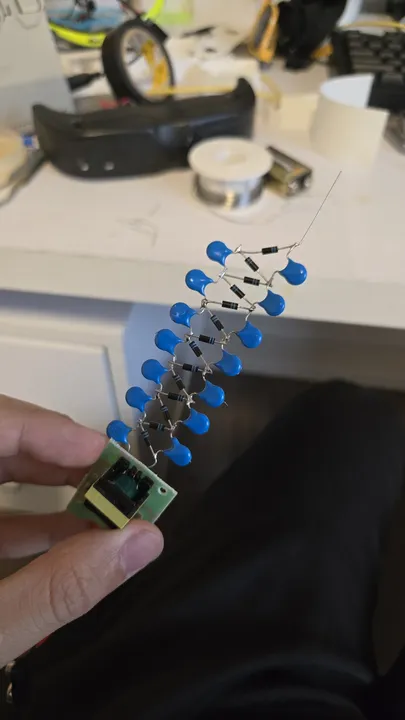
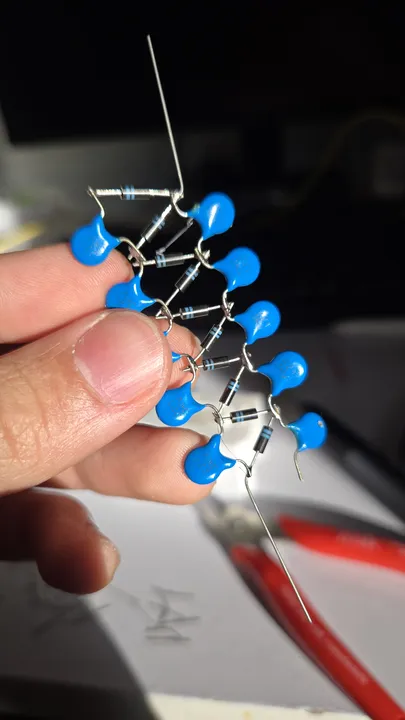
I wanted to build a high-voltage generator that can create sparks and ionize the air. I used a voltage multiplier circuit (Cockcroft-Walton) to turn low voltage into thousands of volts.
The Circuit
I used a high-voltage multiplier to boost the power. This setup successfully creates sparks and ionizes the air.
- Circuit: High-voltage multiplier stack.
- Output: High voltage (kV range), very low current.
- Insulation: Heavy insulation to stop the spark from jumping where it shouldn't.
Testing it as a Wearable
I modified the setup to test it as a wearable ion generator.
- How it works: I became the high-voltage electrode while standing on a conductive mat connected to ground.
- Results: It creates negative ions that neutralize dust in the air.
Safety & Results
Because of the high voltage, I had to be careful with safety:
- Separation: I kept all high-voltage parts separated or insulated.
- Current limiting: I added large resistors to keep the current at a safe level.
- Testing: I confirmed it was working when my hair started standing up and I could smell the ozone.
Built at 16 years 0 months