Smart Ski Goggles V1
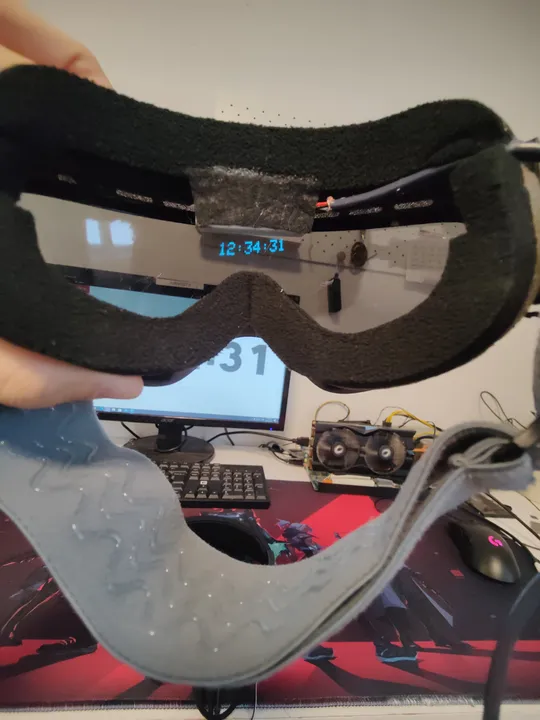
The Goal
I wanted to quickly build a head-up display (HUD) for skiing by using the goggles' own lens as a mirror. This first version was a test to see if I could project a speedometer in my field of vision later on.
How it Works
I noticed that the inside of my goggles was slightly reflective. I found that if I blocked some of the outside light, the reflection became much clearer. I used this trick by placing a bright screen facing the lens so the image reflects directly into my eye, making it look like the display is floating in the air.
- Screen: High-brightness micro-display.
- Lens: Standard internal anti-fog coating.
- Housing: 3D-printed prototype case.
The Result
The test was a success. For this first version, I just displayed a clock to keep it simple. The image stayed aligned and was easy to see even against the bright white snow.
What's Next
Version 1 proved that I could use the lens as a reflector without needing expensive optics. This gives me everything I need to build Version 2, which will connect to my phone to show real-time speed and GPS data.
Built at 14 years 9 months