SafeReps — Marihacks IX
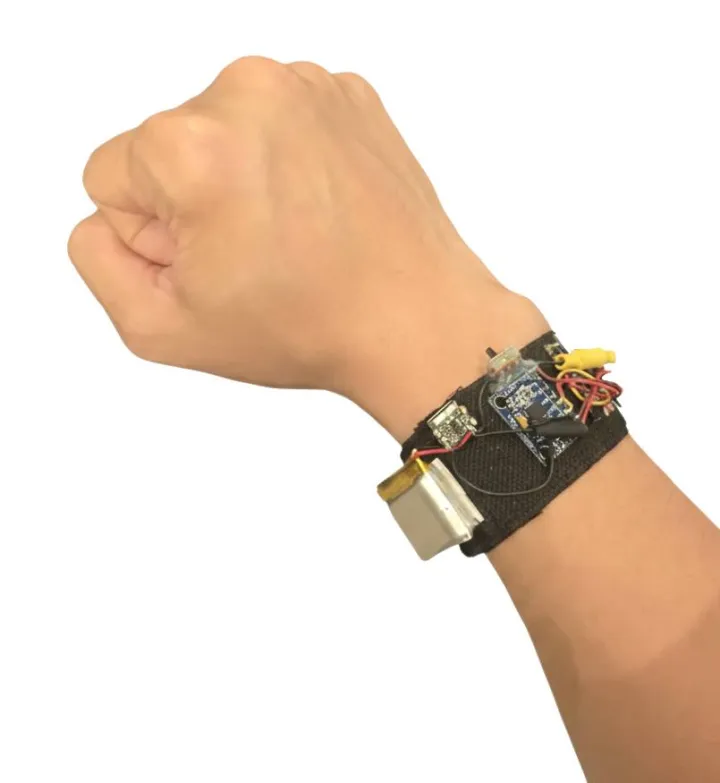
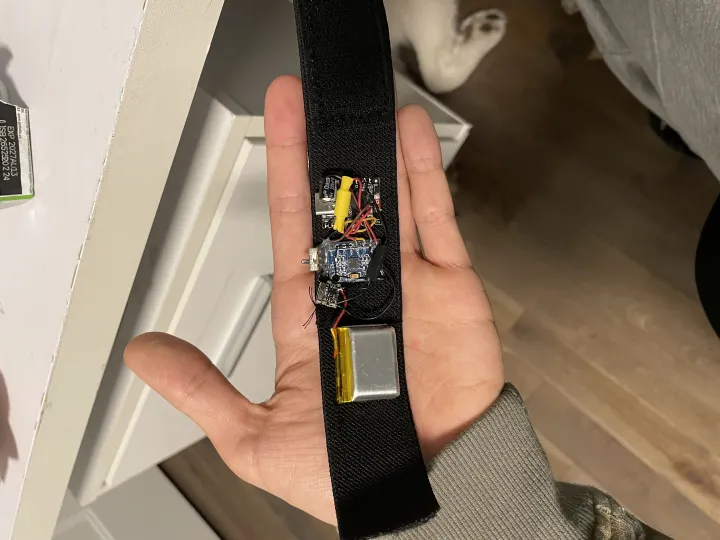
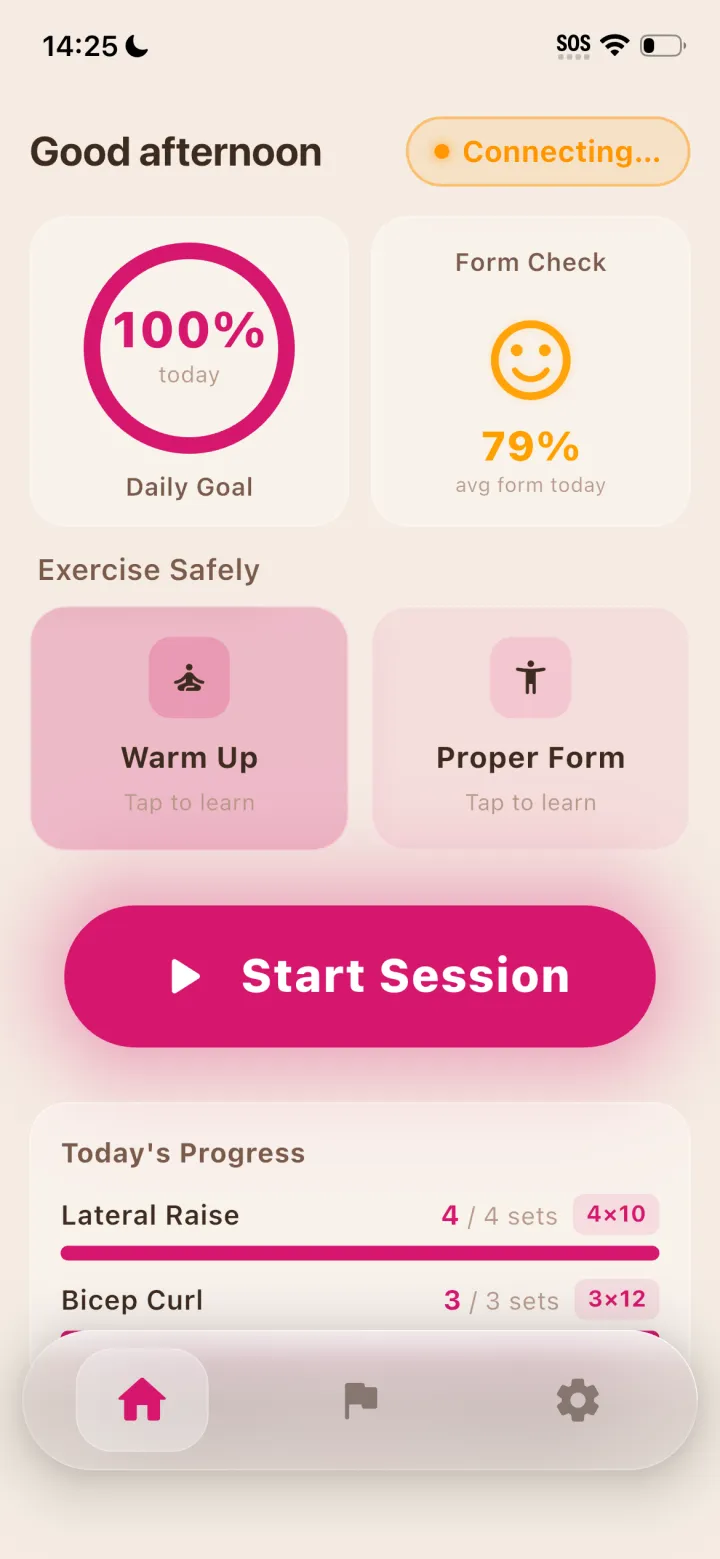
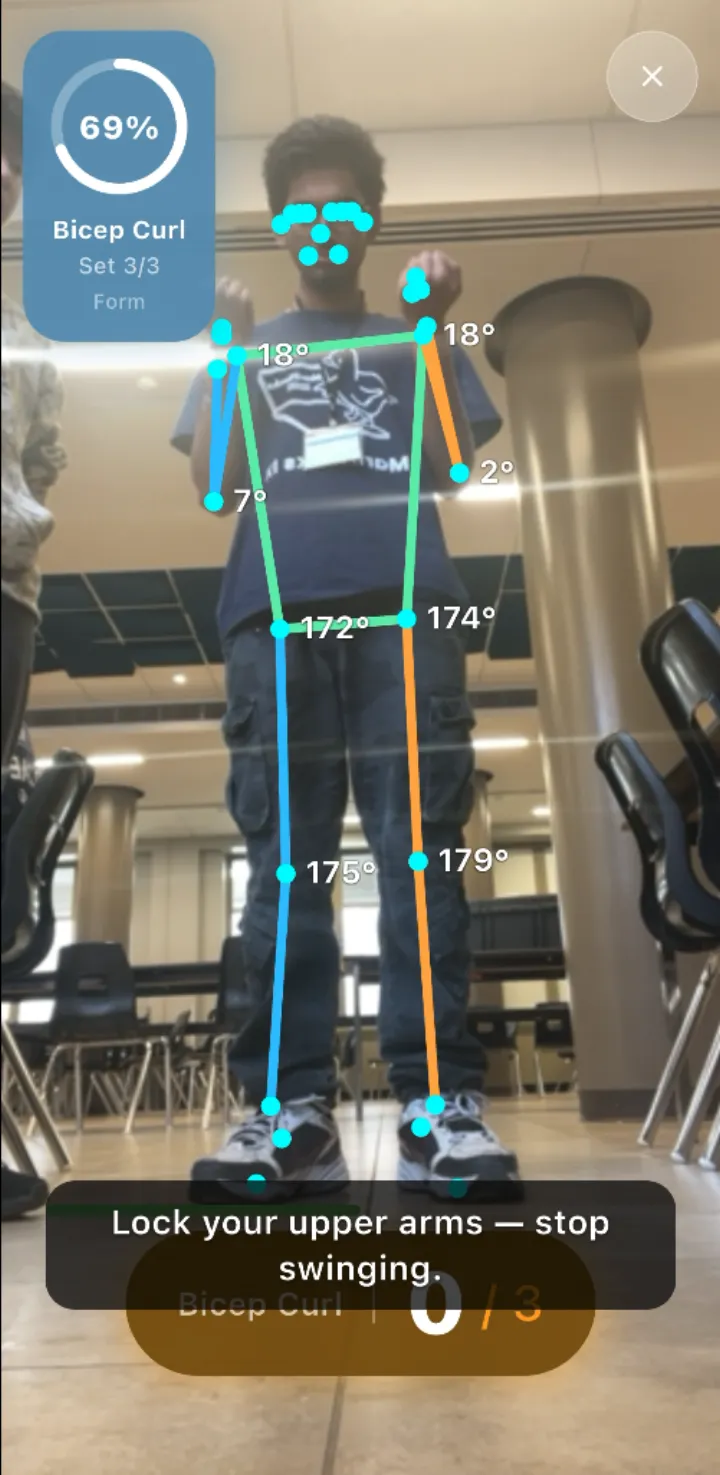
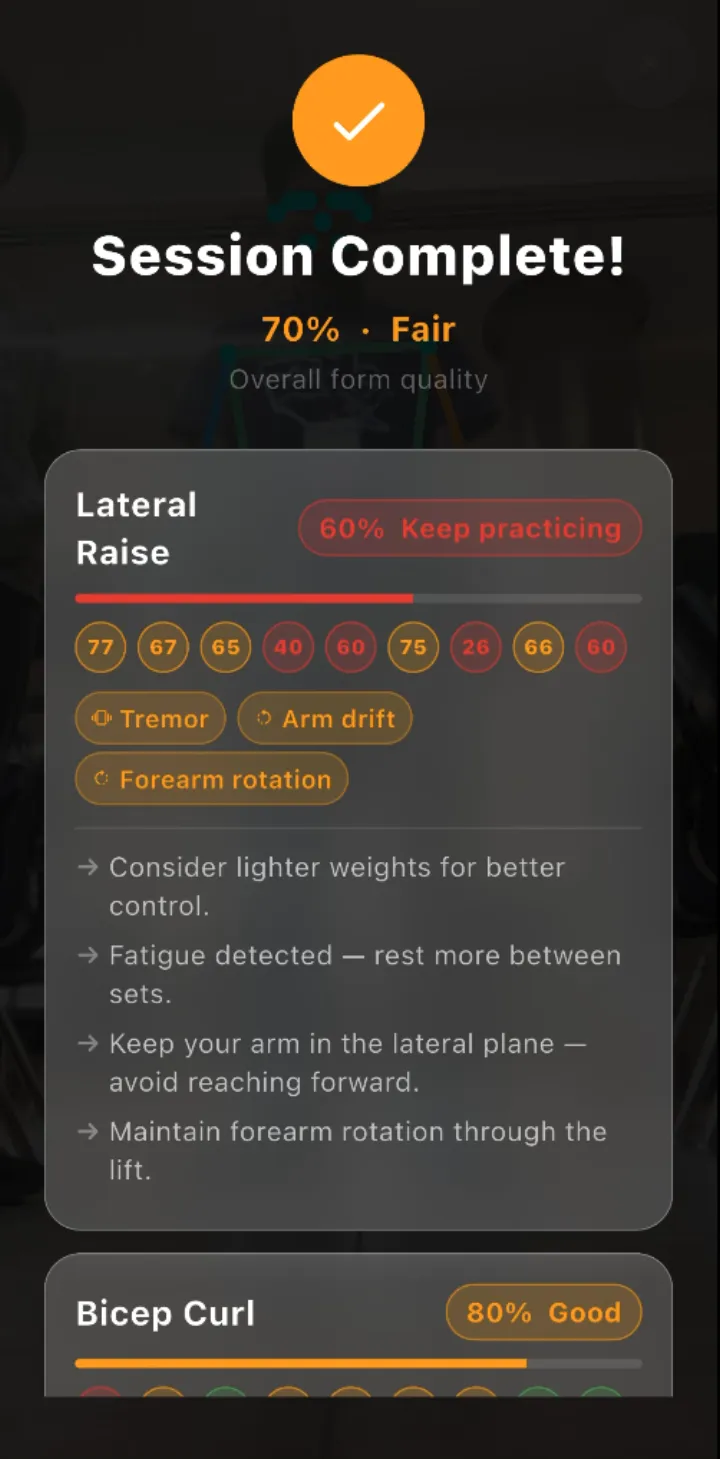
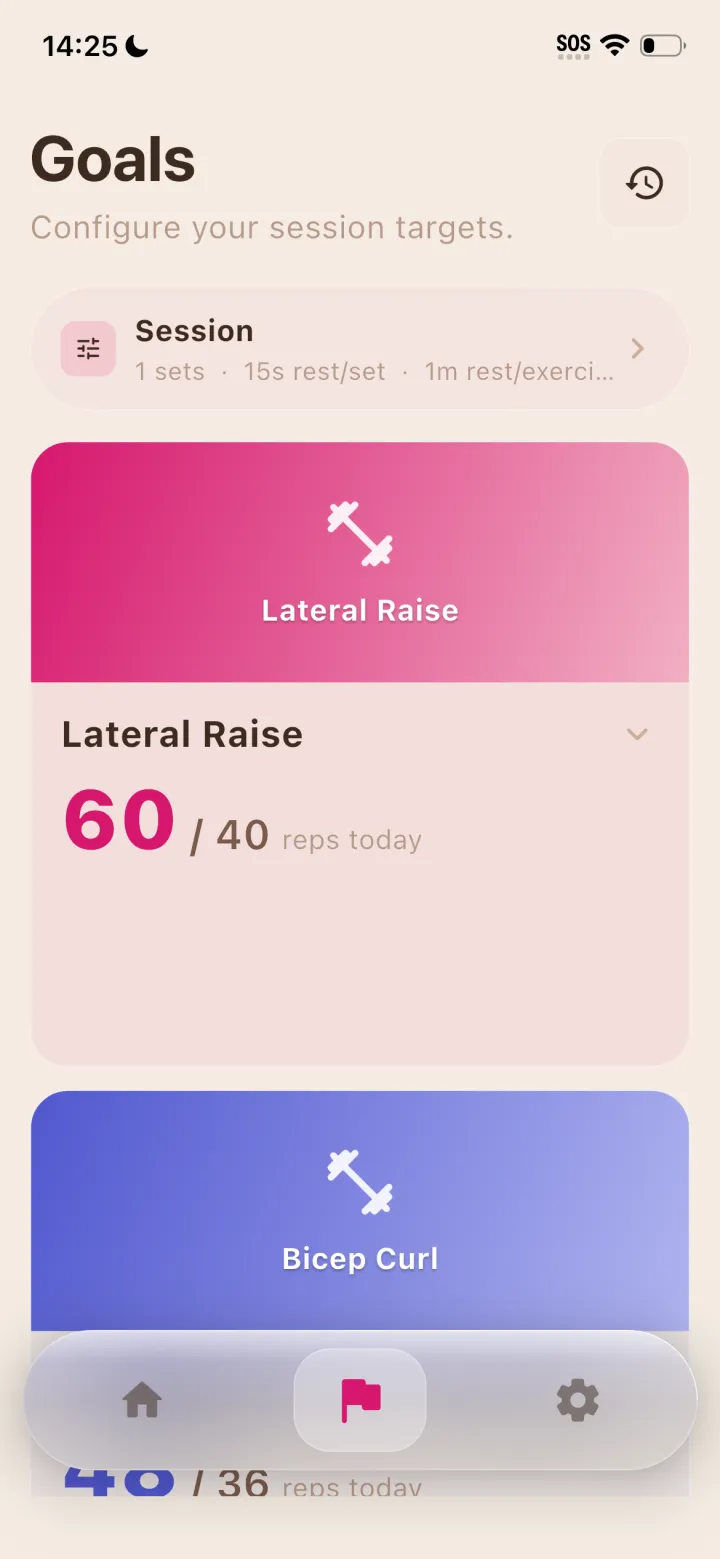
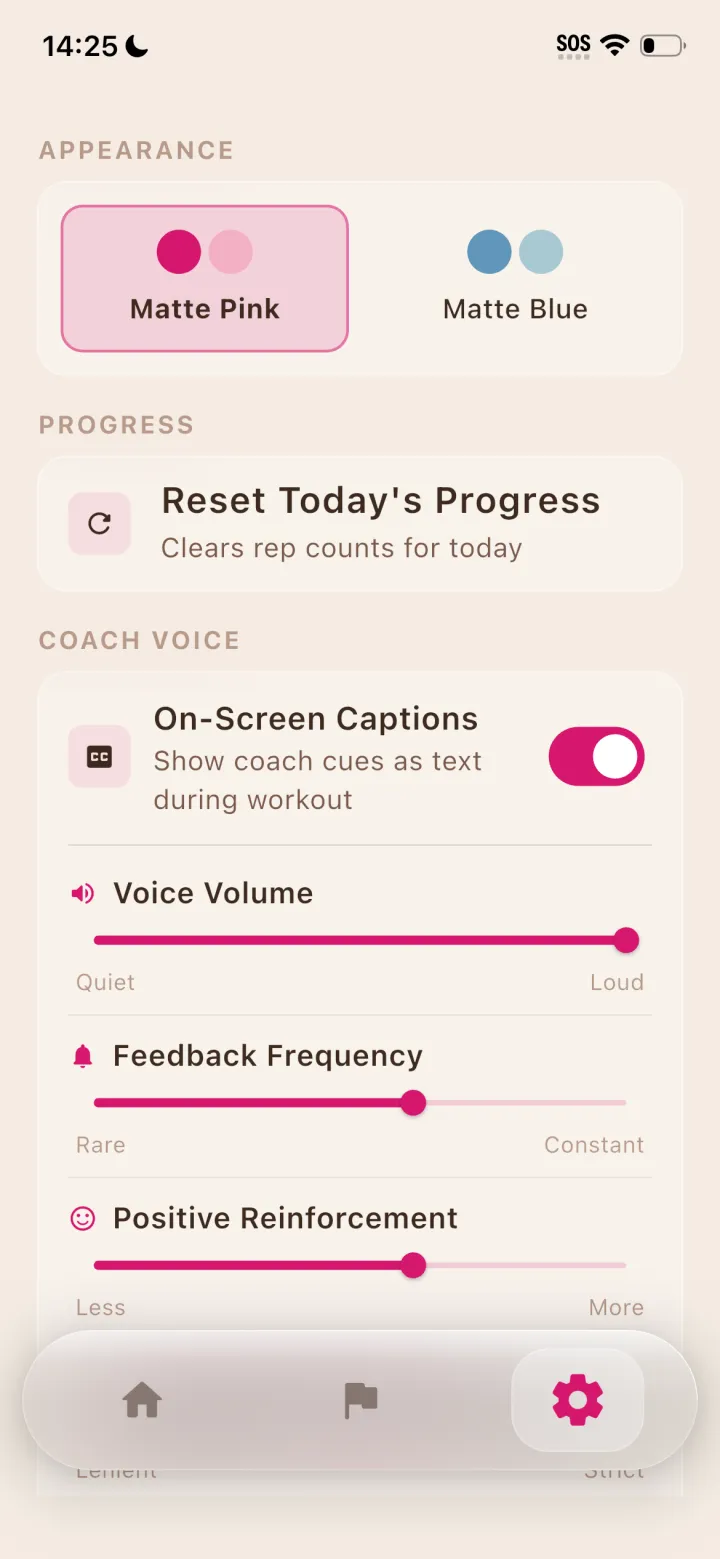
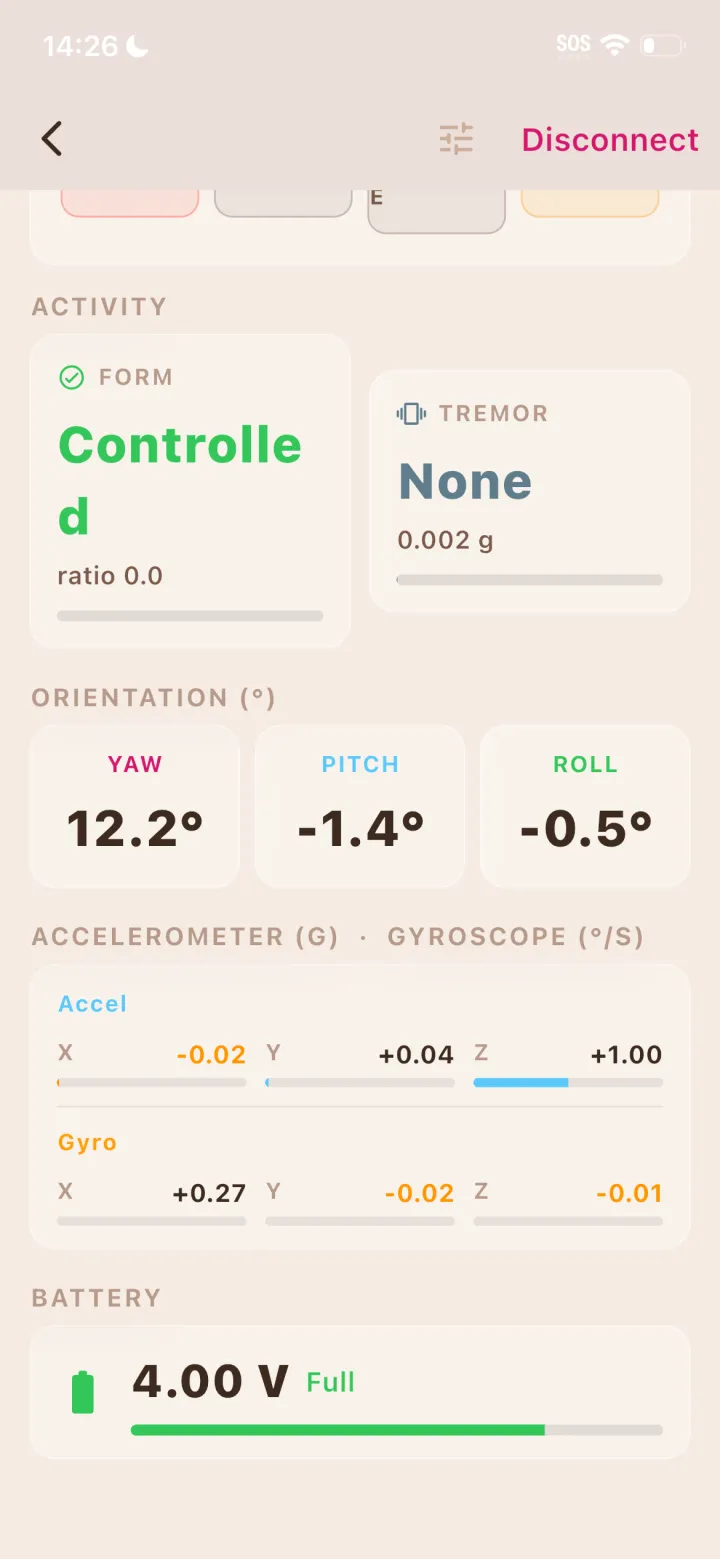
SafeReps is a dual-stream coaching system built for home strength training. A Flutter app tracks 33 skeletal landmarks via Google ML Kit at 30 FPS, while a custom wrist wearable samples a 6-axis IMU at 100 Hz and streams the data over BLE. The two feeds are timestamp-aligned on-device, feeding a rep state machine that classifies every repetition for range of motion, momentum cheating, and neuromuscular fatigue. When a violation is detected, a priority-gated voice coach fires the relevant correction in real time.
Built at MariHacks IX in approximately 15 hours — hardware assembly, firmware, app, and pitch deck included. The team was two people; my partner was relatively new to both hardware and software, so a significant portion of the build time also involved teaching and pair programming rather than just heads-down development.
Tech Stack
| Layer | Technology |
|---|---|
| Mobile app | Flutter + Google ML Kit (pose landmarks at 30 FPS) |
| Wearable MCU | ESP32-C3 with BLE |
| Motion sensor | MPU6050 6-axis IMU at 100 Hz |
| DSP | On-chip high-pass filter + angular/linear velocity ratio |
| State machine | 5-stage FSM: Idle → Top → Descending → Bottom → Ascending |
| Voice coach | Priority-gated audio engine with Fisher-Yates shuffled cue pools |
| Calibration | 1-second T-Pose routine for automatic sensor-to-limb alignment |
Hardware
The prototype BOM comes in under $5, with a custom PCB at volume projected to drop it to ~$3.
- ESP32-C3 — logic and low-latency BLE connectivity
- MPU6050 — 6-axis IMU, sampled at 100 Hz
- 400 mAh LiPo — runtime of 12+ hours of active use
- USB-C charge module — integrated charging
- Protection circuit — 100 kΩ voltage divider for battery monitoring; diode and capacitor for transient protection
Core Intelligence
Rep State Machine
A 5-stage FSM governs every set: Idle → Top → Descending → Bottom → Ascending. State transitions are gated on joint angles crossing calibrated thresholds derived from the T-Pose calibration, so a rep is only counted when it reaches anatomically complete range of motion.
On-Chip DSP
The ESP32-C3 runs two signal processing routines before sending data to the phone:
- Tremor analysis — a 100 Hz high-pass filter isolates neuromuscular jitter from intentional movement. Persistent jitter above threshold is flagged as a fatigue indicator before the user consciously feels it.
- Cheat detection — the ratio of angular velocity to linear acceleration distinguishes clean muscle contraction from momentum-driven swinging.
T-Pose Calibration
A 1-second T-Pose at the start of each set performs two alignment steps: sensor zeroing (synchronizing wearable orientation to the skeletal model) and scaption alignment (correcting for mounting tilt against the user's specific limb geometry). This eliminates the need for any manual setup.
Voice Coach
The audio engine uses priority gating so corrections always interrupt encouragement, never the other way around. Cue pools are shuffled with Fisher-Yates so the same phrase does not repeat until the entire pool has played through.
Latency
The most significant engineering constraint was coaching latency. A cue that arrives 500 ms after a form violation is too late to be useful. The sensor-to-coach pipeline — BLE transfer, timestamp alignment, FSM evaluation, and audio dispatch — was optimized to fire corrections within milliseconds of detection.
Files & Links
Built at 17 years 1 month