3D Printed RC F1 Car
HARDWARE2024-12-21
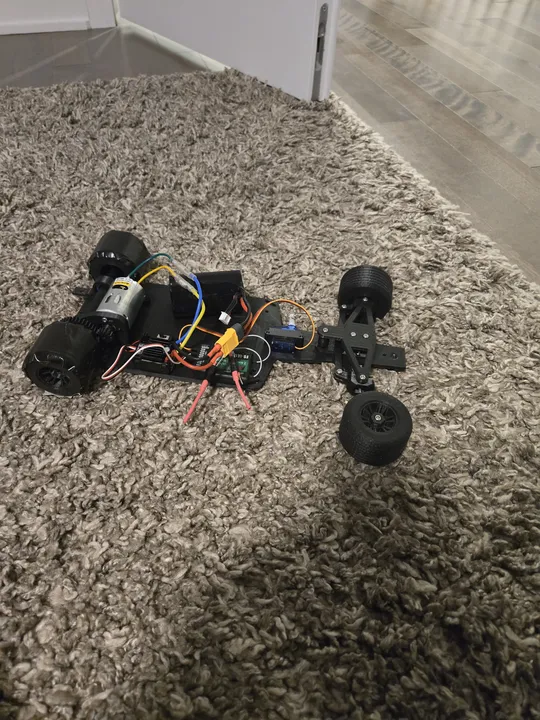
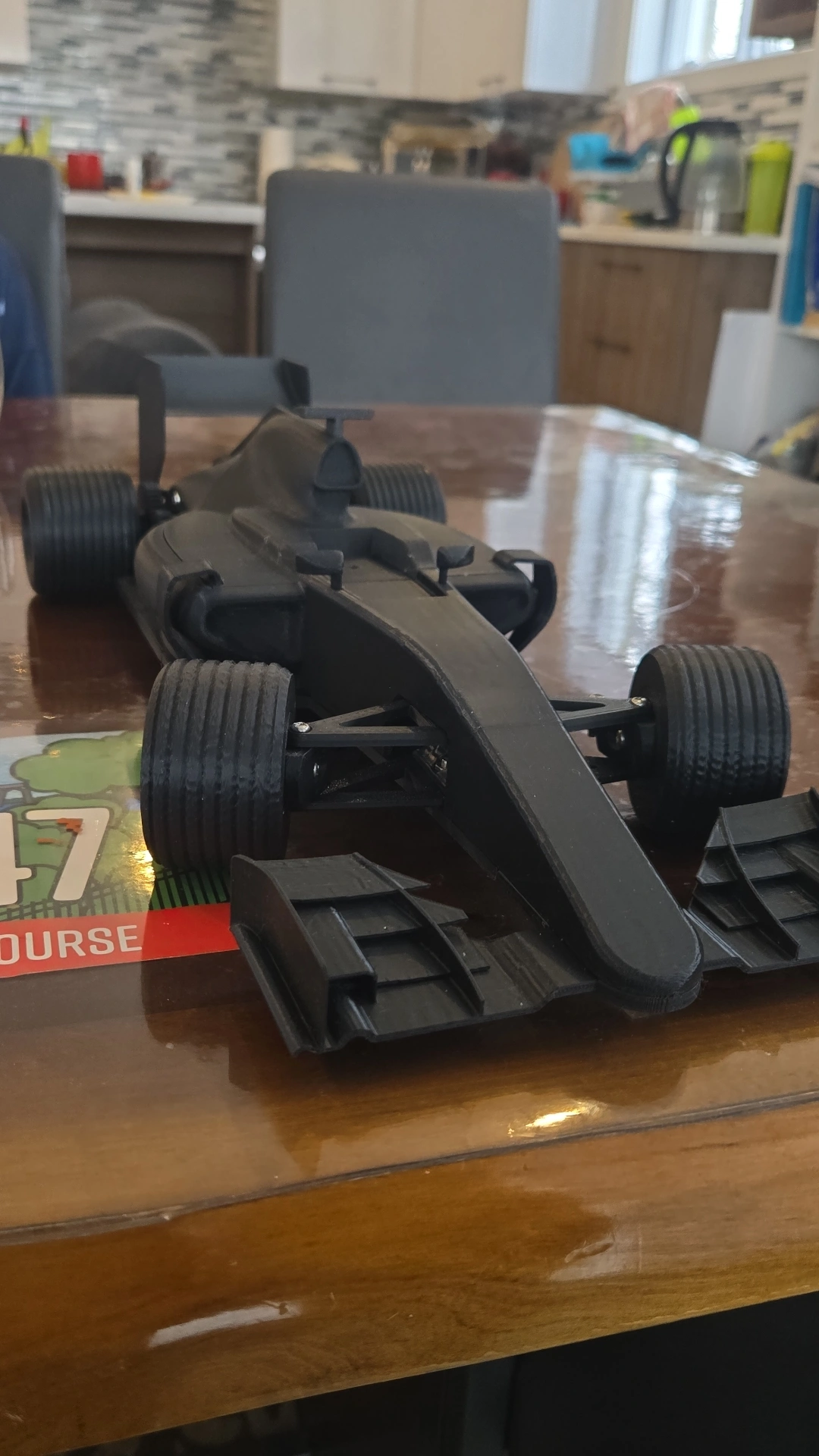
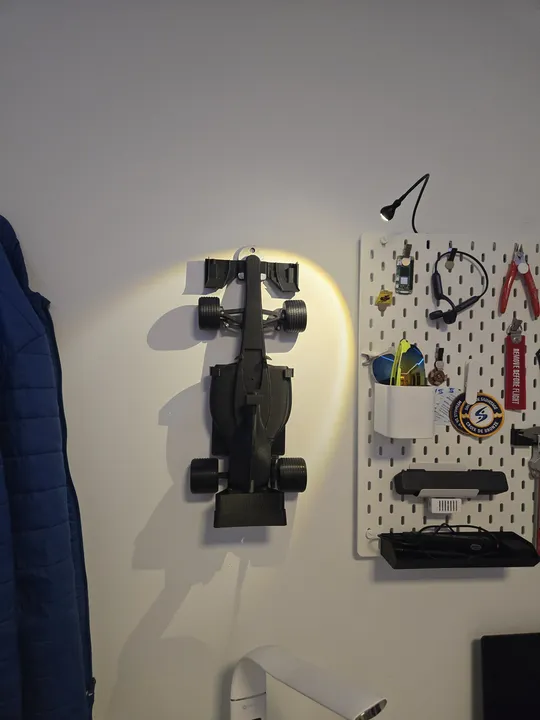
The Goal
I wanted to build a functional RC car that looked like a Formula 1 racer, using only 3D printed parts and some cheap electronics. The main challenge was making sure the moving parts (like the wheel hubs) were precise enough to spin smoothly without breaking.
Materials & Construction
I used two different types of plastic to make the car both stiff and durable:
- Frame: Printed in standard PLA for rigidity.
- Suspension & Tires: Printed in TPU (a flexible, rubber-like plastic). The flexible material absorbs impacts and acts as a suspension system.
- Bearings: I used real stainless steel bearings pressed directly into the plastic parts. It took a few test prints to dial in the tolerances so they wouldn't fall out.
Electronics
- Motors: Salvaged from an old RC car I no longer used.
- Remote: A standard FlySky radio transmitter.
- Tires: Custom TPU tires that provide surprisingly good grip on flat floors.
Result
The car works great and is surprisingly fast. It survived multiple crashes during testing thanks to the flexible TPU parts. This project was my first real deep-dive into multi-material 3D printing and making parts that fit together perfectly.
Built at 15 years 9 months