Back to Hub
EN
LIGHT

FPV Gel Blaster Drone

HARDWARE2025-05-10
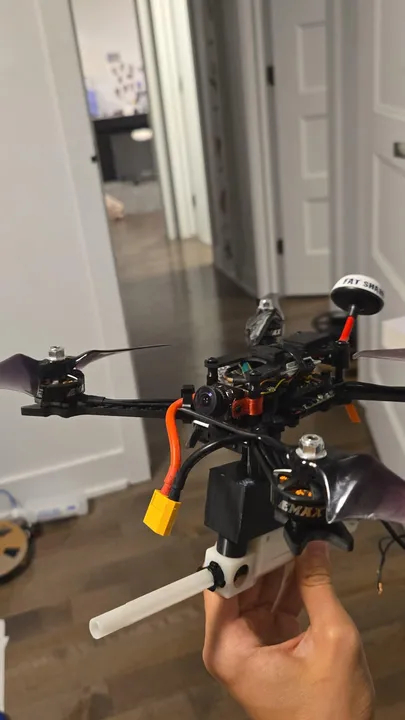
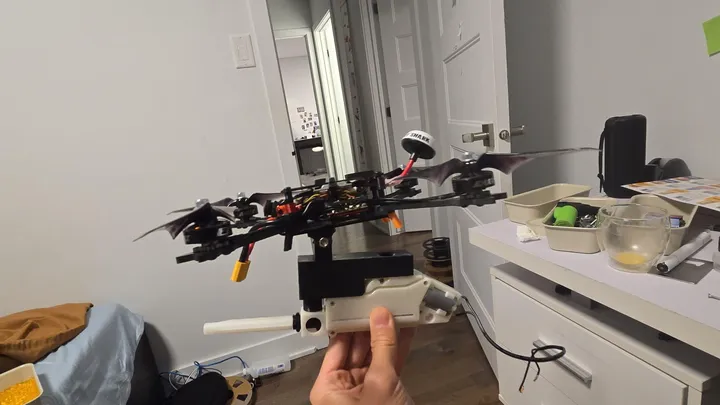
FPV gel blaster drone overview
6-inch analog FPV + gel blaster
Gel blaster drone expanded view
FPV gel blaster drone overview
Gel blaster drone expanded view
FPV gel blaster drone overview
Gel blaster drone expanded view
FPV gel blaster drone overview
Gel blaster drone expanded view
FPV gel blaster drone overview
Gel blaster drone expanded view
FPV gel blaster drone overview
Gel blaster drone expanded view
FPV gel blaster drone overview
Gel blaster drone expanded view
FPV gel blaster drone overview
Gel blaster drone expanded view
FPV gel blaster drone overview
Gel blaster drone expanded view

System Objective

The project objective was the tactical modification of a 6-inch analog FPV multirotor to support a remotely actuated kinetic projectile system (gel blaster). The platform serves as a study in payload integration and real-time kinetic target acquisition via analog FPV optics.

Hardware Integration

The baseline 6-inch chassis was retrofitted with a pneumatic gel-blaster assembly. Actuation is handled via a dedicated MOSFET switch-circuit interfaced with a spare auxiliary (AUX) channel on the flight controller. Analog video was selected for the targeting downlink due to its characteristic zero-latency transmission, ensuring immediate visual feedback during high-dynamic deployment.

  • Multirotor Architecture: 6-inch high-torque freestyle configuration.
  • Optics: Analog FPV downlink (zero-latency acquisition).
  • Payload Architecture: Integrated kinetic projectile assembly, remotely triggered via digital logic.

Operational Dynamics

The addition of the projectile payload induced a significant shift in the platform's center of gravity and increased total takeoff mass. Operational success required a dedicated PID tuning session to compensate for the shifted aerodynamics and recoil-induced gyroscopic noise. The platform successfully validated the efficacy of remote-actuated payloads in low-latency FPV environments.

Built at 16 years 2 months