First Designed FPV Drone
HARDWAREFPV Drone2025-03-30
The Goal
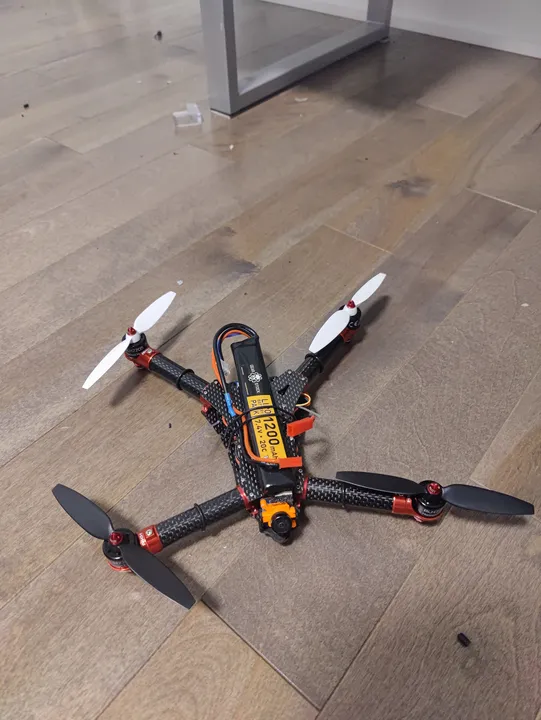
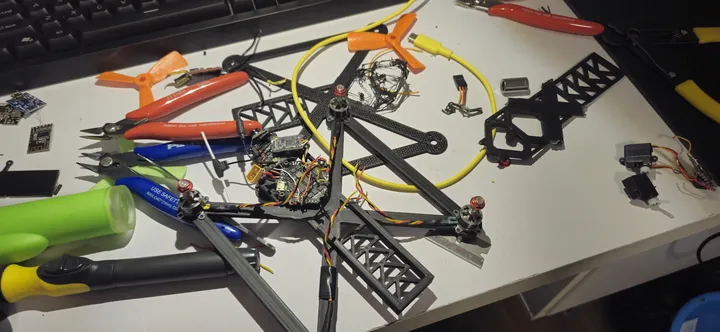
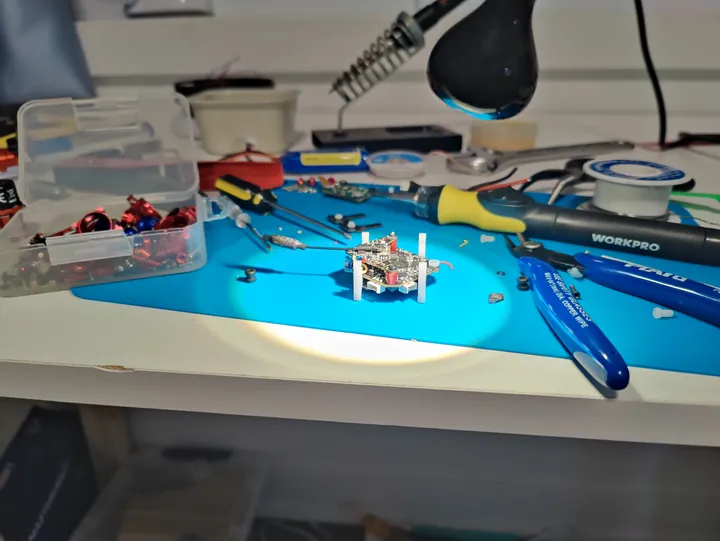
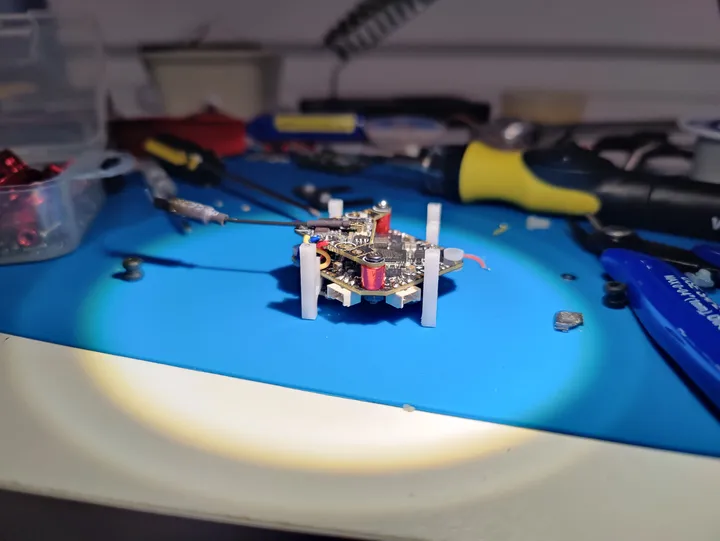
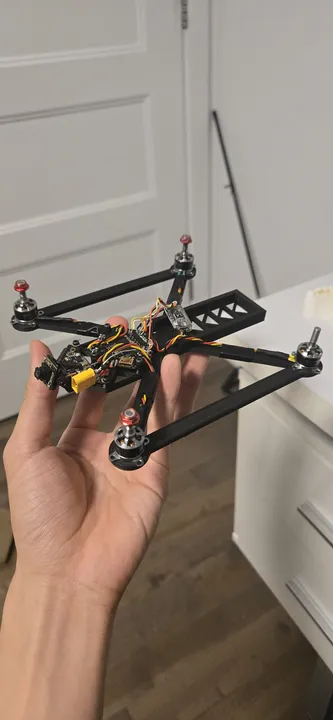
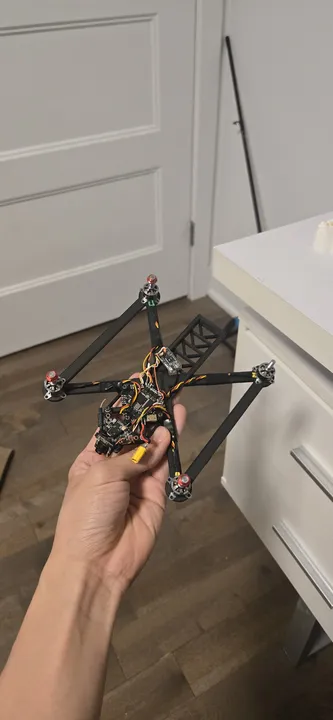
I wanted to design my own drone frame and 3D print it instead of buying a carbon fiber one. I used PLA plastic and salvaged the motors and flight controller from a small 2S drone I already had.
Why it didn't work
It flew, but it was a vibrating mess.
- Flexibility: The 3D-printed arms were too bendy. When the motors spun up, the whole frame would wobble and vibrate, making it almost impossible to control.
- Strength: PLA is fine for desk toys, but it’s not stiff enough for a drone frame that needs to handle high-speed turns.
Lessons Learned
Don't use PLA for drone frames. This project proved that if you want a drone that actually flies well, you need the rigidity of carbon fiber. It was a failure in terms of flight performance, but it’s what pushed me to start building the carbon fiber 3-inch and 5-inch quads you see elsewhere in this portfolio.
Built at 16 years 0 months